

moving with disabilities accessibility — Moving involves stairs, tight doorways, unfamiliar layouts, and the physical demands of loading a truck. For people with disabilities, a standard moving plan falls short. This guide addresses the accessibility considerations and advance planning that protect your independence and safety during relocation, from evaluating your new home’s layout to communicating your needs to movers to setting up your new space for function. Bravos Moving can handle the move if you would rather not do this yourself.
A residential move requires specific accommodations when disability is part of the equation. If you need help tailoring a move to your access requirements, residential moving services that understand accessibility logistics can handle transport and coordination so you focus on setup.
Start with the home itself
Many people with disabilities discover accessibility problems in their new home after signing a lease or closing on a purchase. A walkthrough before commitment catches the real constraints and saves time and money.
Ground-floor access, accessible parking within a reasonable distance, and hallway width matter immediately. If you use a wheelchair or walker, measure doorways in advance. Standard doors are 32 inches wide, but bathrooms or bedrooms are often narrower. If the entrance has only stairs with no ramp or level alternative, your moving day and every day after becomes harder. A property that looks good in photos may have a single step you cannot see in the image.
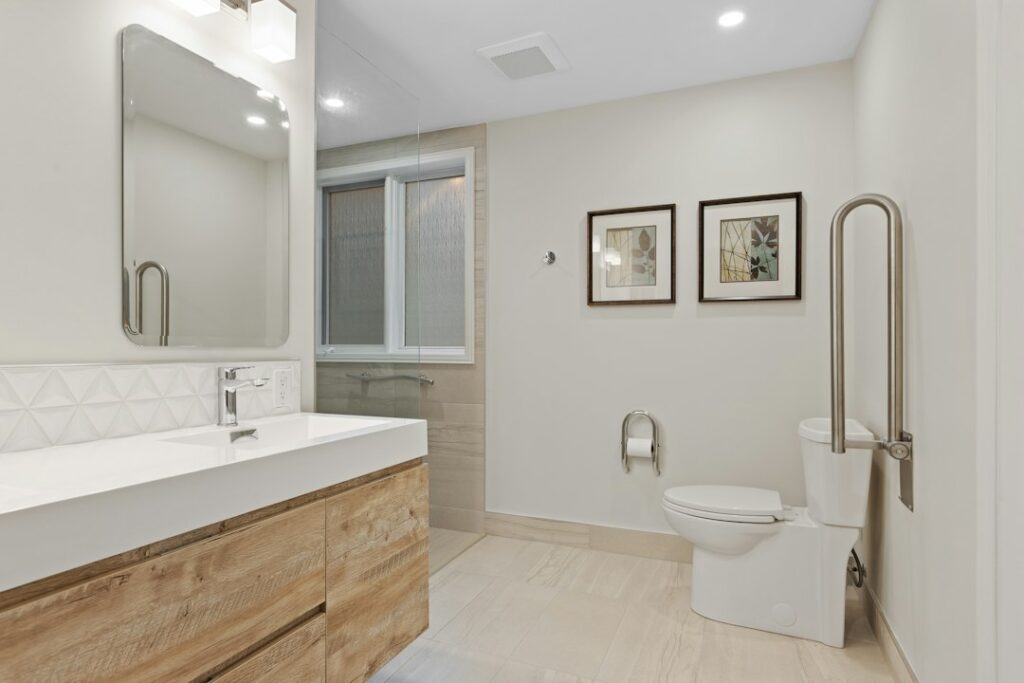
Check each bathroom carefully. Grab bar placement, toilet height, shower or tub configuration, and counter space for medical equipment all factor into daily function. Measure the floor space in front of the sink and toilet—you need enough room to maneuver a wheelchair or transfer from a walker safely.
Light switches, thermostats, and storage should be within arm’s reach. Items stored above shoulder height or below knee level create daily friction. Closet rods at reachable height, kitchen cabinets that don’t require stepping or reaching too far, and door hardware you can operate matter more than décor.
If you use a service animal or have a psychiatric disability, ask about pet policy and noise environment before committing. Some buildings allow only registered assistance animals; others have restrictions you need to confirm in writing.
Prepare your current home for movers

Movers arrive at a specific time. If you have limited energy, mobility pain that varies, or cognitive disabilities that affect decision-making on the fly, the standard moving day pace won’t work for you.
Clear routes and stage items in advance. If movers need a clear path from door to truck, move furniture away from walkways yourself over time, or ask movers to arrive when you’re not present if that reduces stress. Many people find that packing over weeks or hiring packers prevents the physical and mental overload of the last 48 hours.
Label boxes by room and content type, not cryptic abbreviations. Clearly marked boxes help you and anyone assisting you locate what you need during unpacking. If you have sensory disabilities, consider labeling boxes in large print or with audio labels if someone will read them aloud.
If you have chronic pain or fatigue conditions, discuss pacing with your movers before the day. Some companies build in breaks; others assume continuous motion. Make the ask explicit: “I need a one-hour break midday” is clearer than hoping they’ll volunteer time off.
If you use mobility aids, medical equipment, or devices that require specific handling, pack these yourself or walk the movers through storage and reassembly. Don’t assume a mover knows that your customized wheelchair, CPAP machine, or orthotic brace needs careful packing. Pack these items last so they load first, and unpack them first so you have your tools ready.
Communicate access needs to the moving company
A standard moving inquiry asks for a quote. That isn’t enough. You also need to verify that the company can accommodate your specific requirements.
Contact movers early and explain your access needs before booking. Tell them the layout of your current and new homes, including stairs, narrow doorways, elevator access, accessible parking, and any items that require special handling. A mover who has moved people with mobility disabilities before will know to ask about doorway widths and the loading zone; one who hasn’t may show up unprepared.
Confirm that the company can assist with more than loading. If you need help maneuvering items into position in your new home or directing placement for accessibility, say so. Some movers will do this; others stop at truck unload. Knowing the boundary prevents miscommunication on moving day.
If you have sensory disabilities, discuss communication methods in advance. If you’re Deaf, ask whether the company can provide an interpreter or use video relay services. If you’re blind or have low vision, confirm that a sighted person can walk the space or that your moving contact will describe the layout and hazards in detail. If you have anxiety or autism that makes sudden noise or disruption difficult, ask about a quieter start time or a reduced team size so the environment is more predictable.
Put access needs in writing in your moving contract or follow-up email. “Please don’t bring more than 3 people at once” or “Loader must position items in specific locations for accessibility” creates a paper trail and sets expectations clearly.
Plan for post-move setup and positioning
The move isn’t over when the truck unloads. For people with disabilities, where furniture sits and how equipment is positioned determines whether your new home is livable.
Furniture arrangement affects wheelchair maneuverability, sight lines for people with low vision, and safe pathways for people with mobility or balance challenges. A bed that is too low or at the wrong angle compounds chronic pain. A kitchen layout that requires repetitive reaching or bending creates daily strain.
If possible, have a diagram or photo of your previous home’s layout and know which arrangement worked for you. Share this with movers or anyone helping with setup. Don’t assume the default configuration they choose will work. Speak up immediately if furniture placement creates a barrier.
Medical equipment, mobility aids, and adaptive devices need accessible storage and charging. A walker or crutches stored in a closet across the room are useless when you need them. A wheelchair charger on an outlet hidden behind furniture defeats its purpose. Plan for these items to live within arm’s reach and in locations where they don’t block pathways.
If you have sensory processing sensitivities, the noise and chaos of unpacking may be overwhelming. Unpack one room at a time rather than everything at once. Take breaks. Ask family or friends to help coordinate so you’re not managing unpacking and decision-making simultaneously.
Know what varies and what does not
Disability needs are not one-size-fit-all. A person who uses a wheelchair has different access needs than a person with chronic pain, and someone who is Deaf has entirely different communication requirements than someone with developmental disability. What works for one move doesn’t transfer automatically to another.
The common thread is planning ahead and communicating explicitly. Movers don’t read minds, and accessibility doesn’t repair itself after moving day. The work happens in the weeks before and the hours after the move, not during it.
Final Thoughts
Moving with a disability requires more advance communication than a standard relocation, but that planning prevents crisis and injury during an inherently disruptive process. Evaluate your new home’s actual layout and accessibility features in person, not from photos. Talk to your moving company about your specific needs in writing before booking, and confirm that they can accommodate not just transport but also placement and pacing. The difference between a move that exhausts you and one that works within your limits is the planning you do now.
Want help with this?
If your move requires specific accessibility accommodations or coordination with mobility or sensory needs, describing your situation early helps any moving company prepare properly.
FAQ
What should I look for when viewing a new apartment or house to rent or buy?
Check doorway widths (32 inches is standard, but verify each room), bathroom layout and grab bar locations, floor surfaces (carpet vs. tile affects wheelchair mobility), light switch and thermostat placement, parking proximity, and whether the building has elevators if you cannot use stairs. Walk the space during different times of day to assess lighting and noise. If you have a service animal, confirm the pet policy in writing and check for any restrictions specific to assistance animals.
Can I ask movers to arrange furniture in specific positions for accessibility?
Yes. Confirm this in advance when you book. Many movers will position furniture where you direct them, but others may consider their job done at unload. State your requirement clearly: “All furniture must be positioned according to my accessibility diagram” or “Bedroom doorway must have at least 36 inches clear of furniture.” This sets expectations and gives you a basis for feedback if placement is incorrect.
How far in advance should I tell a moving company about my disability-related needs?
Contact them before booking or within 48 hours after. Early communication gives them time to plan logistics, arrange staffing, and ask clarifying questions. Last-minute disclosure leaves no time for adjustment and increases the risk of misunderstanding.
What if I cannot supervise unpacking due to fatigue or health limitations?
Hire movers or packers to do the unpacking, or ask a friend or family member to oversee placement on your behalf. Create a written diagram or photo guide showing where each type of item should go, so the person directing placement doesn’t have to make decisions alone. Prioritize unpacking the bedroom, bathroom, and kitchen first so you have the essentials functional immediately.
Are there accessibility resources specific to moving in Canada?
The Government of Canada’s accessibility resources provide general guidance on rights and accommodations. Provincial human rights commissions can answer questions about tenancy and landlord obligations regarding accessibility modifications. For disability-specific moving logistics, your local disability organization or occupational therapist can recommend movers who have experience with your particular access needs.
Can I unpack after movers leave, or should I plan for help?
Unpacking is physically and cognitively demanding. If you have mobility limitations, chronic pain, chronic fatigue, or cognitive disabilities, don’t assume you can handle it alone after the moving day itself. Arrange for help in advance—whether hired packers, family, or friends—so unpacking happens on your terms, with breaks, and at a sustainable pace.