
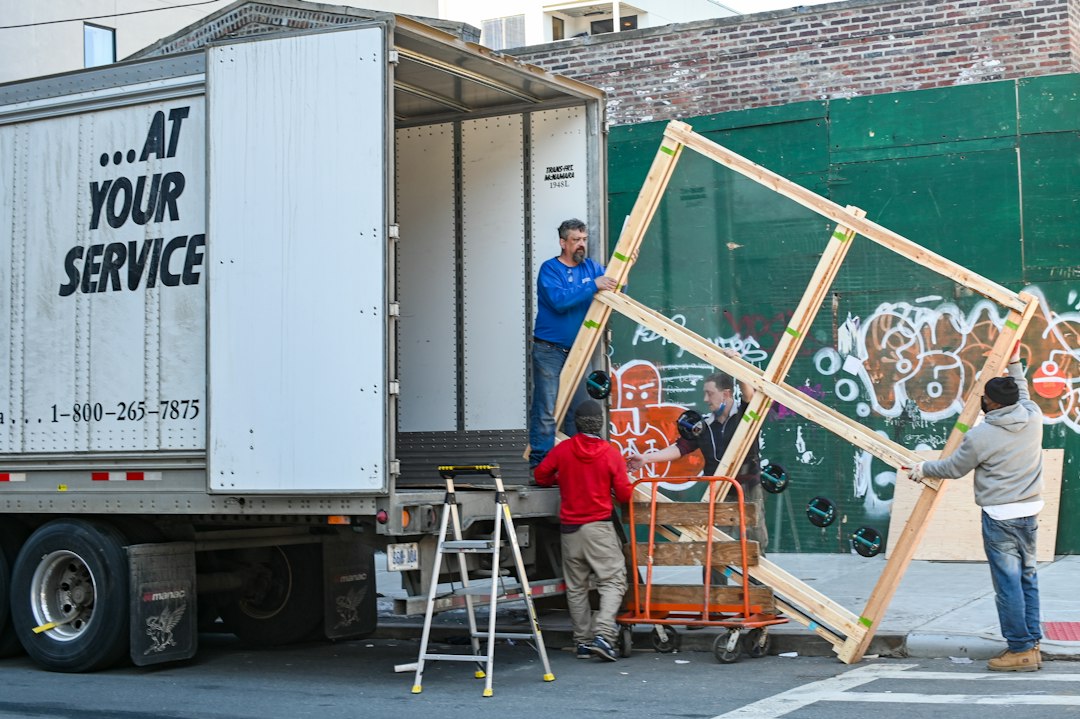

Moving insurance and liability coverage are not the same thing, and most people discover this the hard way—when a lamp breaks or a couch gets scratched on moving day and the moving company says it’s not their problem.

Standard moving company liability is legally required in Canada but often covers only pennies per pound of damage, leaving you responsible for the real cost of replacing your belongings. Moving insurance, by contrast, is optional coverage you purchase to fill that gap, protecting your items at their actual replacement value. Whether you need it depends on what you own, how much risk you’re comfortable carrying, and what your homeowner’s or tenant’s insurance already covers.
What Is Standard Moving Company Liability and Why Is It So Limited?
Every licensed moving company in Canada must carry basic liability coverage, but that coverage is bare-bones. Under federal and provincial regulations, carriers must offer liability at a minimum rate—typically around $0.60 per pound of damaged goods. If your dining room table weighs 150 pounds and is destroyed, you’d recover roughly $90, even if the table cost $2,000.
This limitation exists because the moving industry has always operated on the assumption that liability is kept low to keep prices down. The company assumes you’ll buy additional insurance if your belongings have real value. If you don’t buy extra coverage and something breaks, the mover’s legal obligation ends at that per-pound rate—no exceptions.
Pro Tip: Always ask your moving company upfront what their standard liability limit is and request it in writing before moving day.
What Are the Main Types of Moving Insurance Available?

When you book a moving company, you’ll typically be offered two insurance options:
- Released-Value Protection: The cheapest or often free option. The mover assumes liability only at the per-pound rate ($0.60–$1.50 per pound, depending on province). You get almost no real protection.
- Full-Value Protection (or Declared-Value Coverage): The mover agrees to repair, replace, or compensate you for the full replacement cost of any item damaged or lost during the move. This is what you actually want, but it costs extra—typically 1–3% of your total move cost.
Some moving companies also offer third-party insurance options, where you purchase a separate moving insurance policy from an insurance broker rather than the mover. This can sometimes offer more flexibility or better rates, particularly for high-value moves or cross-border relocations.
| Insurance Type | Coverage Limit | Cost | Best For |
|---|---|---|---|
| Released-Value (Basic) | $0.60–$1.50 per pound | Free or minimal | Low-value moves, minimal risk tolerance |
| Full-Value Protection | Up to declared value of goods | 1–3% of move cost | Standard moves with valuable items |
| Third-Party Moving Insurance | Customizable limits | Variable (0.5–2% of insured value) | High-value moves, specialty items |
Does Your Homeowner’s or Tenant’s Insurance Cover Moving Damage?
Before buying moving insurance, check your existing homeowner’s or tenant’s policy. Many homeowner’s policies extend coverage to your belongings during a move, but the details matter enormously.
Most homeowner’s policies cover items in transit to a new home, but they may have exclusions or deductibles that make the coverage weak. For example, if your policy has a $1,000 deductible and a box of glassware worth $800 breaks, you recover nothing. Tenant’s insurance typically offers similar protections but again depends on the policy wording.
Some policies specifically exclude damage caused by the moving company’s negligence, treating that as a third-party liability issue rather than your own property loss. Call your insurance broker before moving day and ask three specific questions:
- Does my policy cover belongings in transit during a residential move?
- What is the deductible, and are there any exclusions related to moving company damage?
- What is the maximum payout for a single claim?
Pro Tip: Get your insurance answer in writing or via email; verbal confirmation won’t help if you need to file a claim later.
When Do You Actually Need Moving Insurance?
You should strongly consider full-value protection or third-party moving insurance if any of these apply:
- You own high-value items (artwork, antiques, electronics, designer furniture, jewelry).
- Your home contains specialty items like pianos, wine collections, or vintage furniture that require careful handling.
- Your move involves a long distance or cross-border travel (where risk of damage increases).
- Your homeowner’s or tenant’s insurance has a high deductible or explicitly excludes moving-related damage.
- You’re moving with young children or pets whose accidents might damage items during the transition.
- You’re moving into or out of storage, where items sit exposed longer and risk compounds.
You might skip additional insurance if you’re moving locally with mostly modest furniture and everyday items, and your homeowner’s insurance clearly covers transit damage with a low deductible. But that’s a minority scenario.
Industry guidance from the Canadian Association of Movers suggests that full-value protection becomes cost-effective once your household goods total more than about $15,000, since the insurance cost (typically 1–3% of move value) becomes cheaper than the risk of a single major loss under standard liability.
What Should You Do Before Accepting or Refusing Moving Insurance?
Start by documenting what you own. Create a detailed inventory of your major items—furniture, appliances, electronics, artwork—and note approximate replacement costs. You don’t need receipts, but you do need realistic estimates. Use online pricing (furniture retailers, appliance stores) to get current market values for key items.
Once you know what you’re moving, compare your options:
- Ask your moving company for the exact cost of full-value protection for your specific move.
- Contact your homeowner’s or tenant’s insurance broker to confirm coverage details and any gaps.
- If the gap is significant, get quotes from third-party moving insurance brokers (common in Ontario and BC).
- Calculate the cost-benefit: if insurance costs $300 and your coverage gap is $5,000, it’s clearly worth it.
Request the insurance terms in writing before you sign the moving contract. Make sure the policy clearly states what is and isn’t covered (some policies exclude damage from poor packing by the mover or from theft during delivery stops).
Pro Tip: If you’re moving valuable items like artwork or a piano, ask the moving company whether they offer specialized insurance or require third-party coverage as a condition of the move.
What Happens If You Refuse Insurance and Something Gets Damaged?
I’ve watched people skip moving insurance to save $200–$500, only to spend weeks fighting a moving company over a $3,000 couch that arrived with a large tear. The mover offered $90 in compensation (based on per-pound liability) and refused to budge. The customer’s homeowner’s insurance claim was denied because the policy explicitly excluded moving-company-caused damage. The result: a $2,910 loss that could have been prevented.
If you refuse insurance and damage occurs, your recourse is limited. You can file a complaint with your provincial moving regulator (Consumer Protection BC, Service Ontario, etc.), but regulators typically can’t force a mover to pay beyond their declared liability limit. You can sue in small claims court, but the mover will cite the per-pound liability limit, and you’ll likely lose. Small claims courts generally enforce the industry standard unless you can prove gross negligence.
The moving company’s incentive to settle fairly drops to nearly zero once you’ve signed away coverage. The math shifts dramatically in your favor if you have insurance; with insurance, the mover’s insurer pushes them to resolve claims quickly because the insurer pays.
Key Takeaways
| Point | Why It Matters |
|---|---|
| Standard liability covers only $0.60–$1.50 per pound | A $2,000 chair might yield only $100 in compensation |
| Full-value protection costs 1–3% of your move total | Worth it if your belongings exceed ~$15,000 in value |
| Your homeowner’s insurance may cover moving damage | Always confirm with your broker before declining moving insurance |
| Insurance claims are faster when a policy is in place | Without insurance, you’re fighting the mover alone; with it, their insurer pushes for resolution |
| Refuse insurance only if your belongings are low-value and your home policy covers transit | Otherwise, the $200–$500 cost is cheap peace of mind |
Frequently Asked Questions
Is moving insurance required by law in Canada?
No. Moving companies are required to carry basic liability coverage (the $0.60–$1.50 per pound limit), but you are not required to purchase additional moving insurance. However, most people should, because the base liability is so low that it leaves you exposed.
Can I use my credit card’s travel or moving protection instead of buying insurance?
Rarely. Most credit card protections cover personal liability (if you accidentally damage the mover’s truck) or travel delays, not damage to your own belongings during a move. Check your card’s terms, but don’t assume it covers moving damage; it almost certainly doesn’t.
What items are typically excluded from moving insurance?
Common exclusions include cash, jewelry, artwork (sometimes), items damaged by poor packing by you or the mover, theft during delivery stops, and items not properly declared in the inventory. Always read the policy details before signing.
If I’m moving a long distance or across the border, do I need insurance?
Yes, longer moves carry higher risk of damage from handling, road conditions, and weather exposure. Cross-border moves especially benefit from full-value protection because claims can be complicated across jurisdictions.
How do I file a moving insurance claim if something breaks?
Document the damage immediately with photos, retain the packaging and any broken pieces, and notify the moving company within the timeframe specified in your contract (usually 30 days). Provide a detailed written claim with a description of the item, original cost, and replacement cost estimate. If you have third-party insurance, also notify your insurance broker. Respond to any requests for additional information quickly; delays often result in claim denial.
Want help with this?
If you want a straight answer for your situation, send Bravos Moving a note. We read every message and reply with next steps — no generic sales dump.
Comments ( 1 )
Leave a Reply
You must be logged in to post a comment.
[…] and liability: Moving insurance or liability coverage protects high-value belongings; list the premium […]