
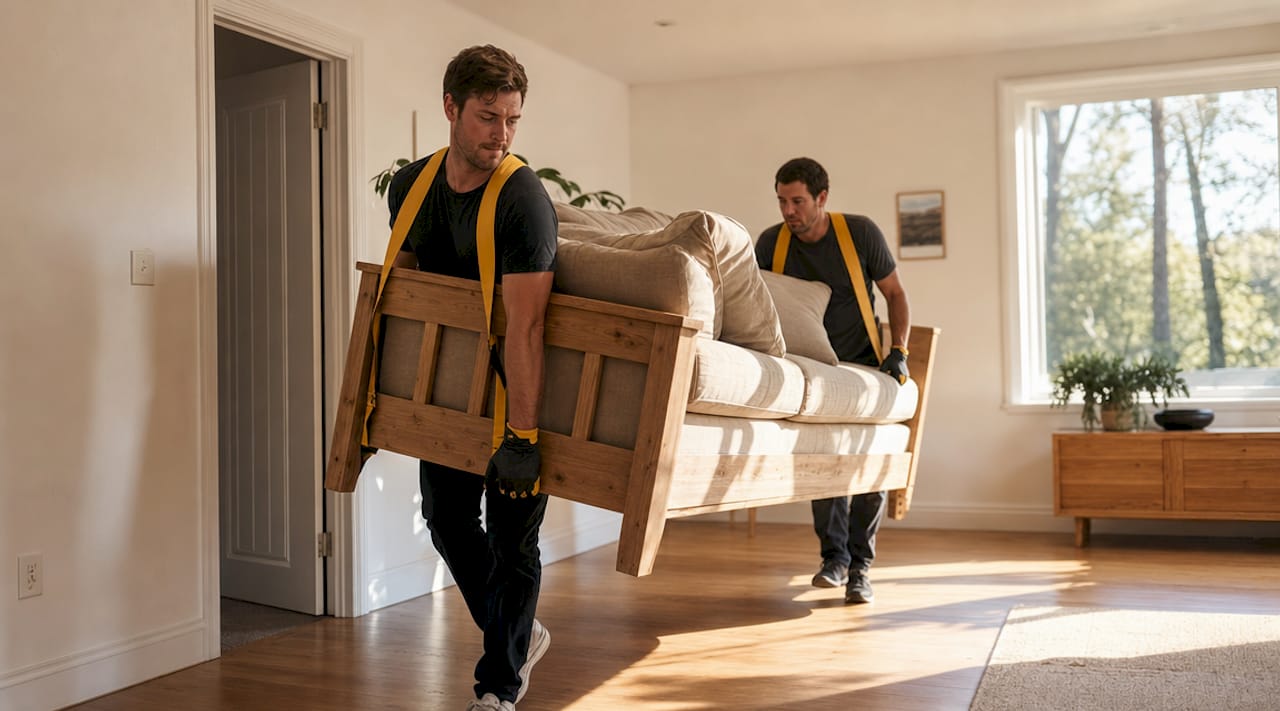

Moving large furniture safely is defined as the controlled process of transporting heavy, bulky pieces using proper body mechanics, specialised equipment, and planned routes to prevent injury and property damage. Most moving injuries happen not because people lack strength, but because they skip preparation and rely on brute force. The right tools, including moving blankets, furniture dollies, and shoulder straps, change the equation entirely. This guide walks you through every stage of a safe furniture move, from assembling your kit to loading the truck.
What essential tools do you need for moving large furniture safely?
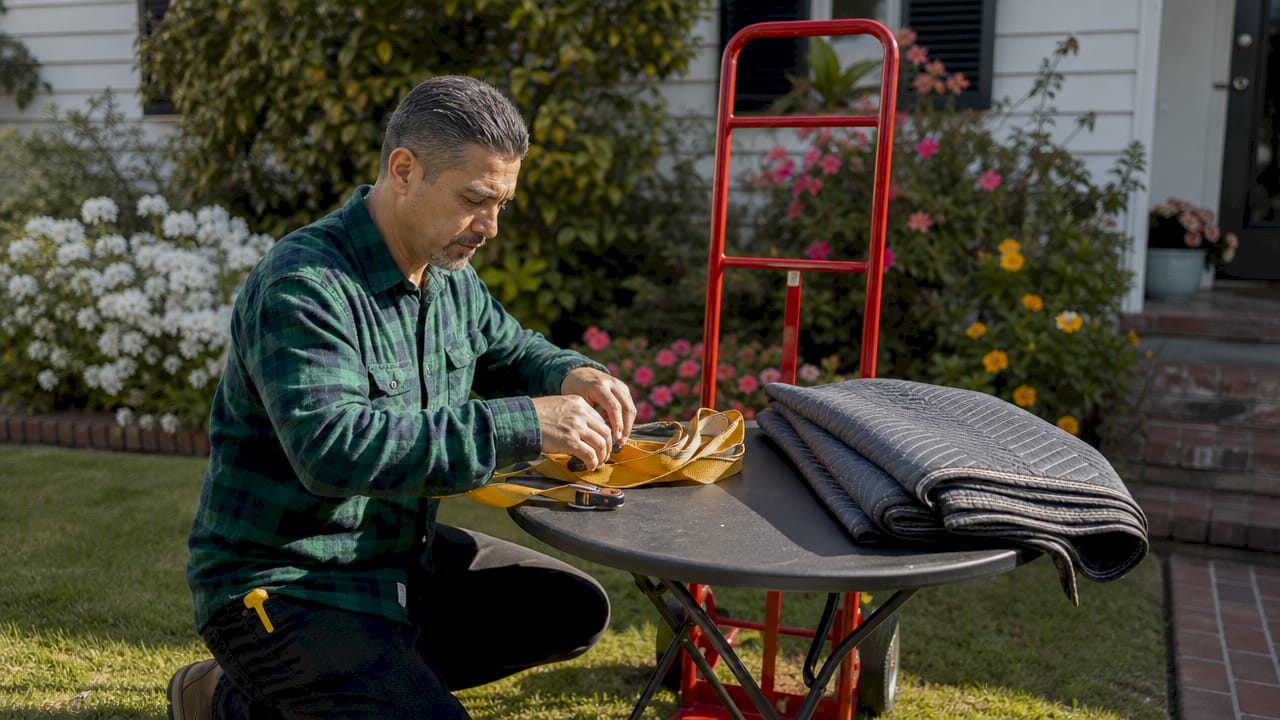
Safe furniture handling is a trade skill before it is a physical one. Proper planning and protective equipment like moving blankets, dollies, sliders, and straps form the foundation of every injury-free move. Buying or renting the right gear costs far less than a back injury or a gouged hardwood floor.
The core equipment list
- Furniture dollies: A standard four-wheel dolly handles flat, heavy items like dressers and appliances. A stair-climbing dolly has a tri-star wheel cluster that rolls up and down steps without lifting. Both are available at U-Haul, Home Depot, and most hardware rental shops.
- Furniture sliders: These low-friction pads sit under legs or corners and let you glide pieces across hardwood, tile, or carpet without scratching. They cost under $20 for a set of eight.
- Moving blankets and bubble cushions: Wrap corners and flat surfaces before strapping anything down. Moving blankets absorb impact; bubble cushions protect glass and mirrors.
- Moving straps and shoulder harnesses: Moving straps cost $20 to $40 and reduce the felt weight of a load by 50 to 66 per cent. That reduction matters enormously when you are carrying a sectional sofa up a flight of stairs.
- Personal protective equipment: Heavy-duty work gloves prevent cuts and improve grip. Steel-toed boots protect feet if a piece slips. A back brace adds lumbar support for anyone with a history of back problems, though it is not a substitute for correct lifting form.
| Equipment | Primary purpose | Approximate cost |
|---|---|---|
| Four-wheel dolly | Moving flat, heavy items on level ground | $20–$50 rental |
| Stair-climbing dolly | Navigating stairs with heavy loads | $30–$70 rental |
| Furniture sliders | Gliding pieces across floors without scratching | Under $20 |
| Moving straps | Reducing felt load weight and improving balance | $20–$40 |
| Moving blankets | Protecting surfaces from scratches and impact | $10–$20 each |
Pro Tip: Rent a stair-climbing dolly even if your move involves only a few steps. The reduction in effort and injury risk pays for the rental fee within the first flight.
How do you plan and prepare your environment before the move?
Safe moving relies on preparation and the right equipment, not strength alone. The single most preventable cause of furniture damage is an unmeasured doorway or an uncleared hallway. Spend 30 minutes on route planning and you will save hours of frustration on moving day.
Follow these steps before you lift a single piece:
- Measure everything. Record the width, height, and diagonal dimension of each large piece. Measure every doorway, hallway, and stairwell opening it must pass through. The diagonal measurement matters most: a sofa that is 84 inches long can often be tilted to fit through a 32-inch door if the diagonal clears.
- Clear the walkways completely. Remove rugs, boxes, shoes, and any loose items from every path the furniture will travel. A tripping hazard at the wrong moment causes serious injury.
- Protect floors and corners. Lay down cardboard or old blankets on hardwood floors along the route. Attach foam corner guards to wall edges and door frames before you start.
- Consider temporary door removal. Removing door frames temporarily can add two to three inches of clearance and prevent frame damage when passing oversize pieces. A standard interior door takes under five minutes to remove with a hammer and a pin punch.
- Disassemble what you can. Removing legs, shelves, and detachable parts before moving reduces both the size and the weight of each piece. Label hardware in a zip-lock bag taped to the underside of the furniture.
- Plan your load order. Decide which pieces go into the truck first. Heaviest items load first, lightest last. Knowing this in advance prevents backtracking and re-lifting.
Pro Tip: Walk the full route with a tape measure before moving day, not on it. Discovering a tight corner while carrying a wardrobe is the worst time to problem-solve.
For a full pre-move checklist specific to Toronto-area homes, the step-by-step move preparation guide on the Bravosmoving blog covers room-by-room planning in detail.
What are the best techniques for lifting and carrying large furniture?
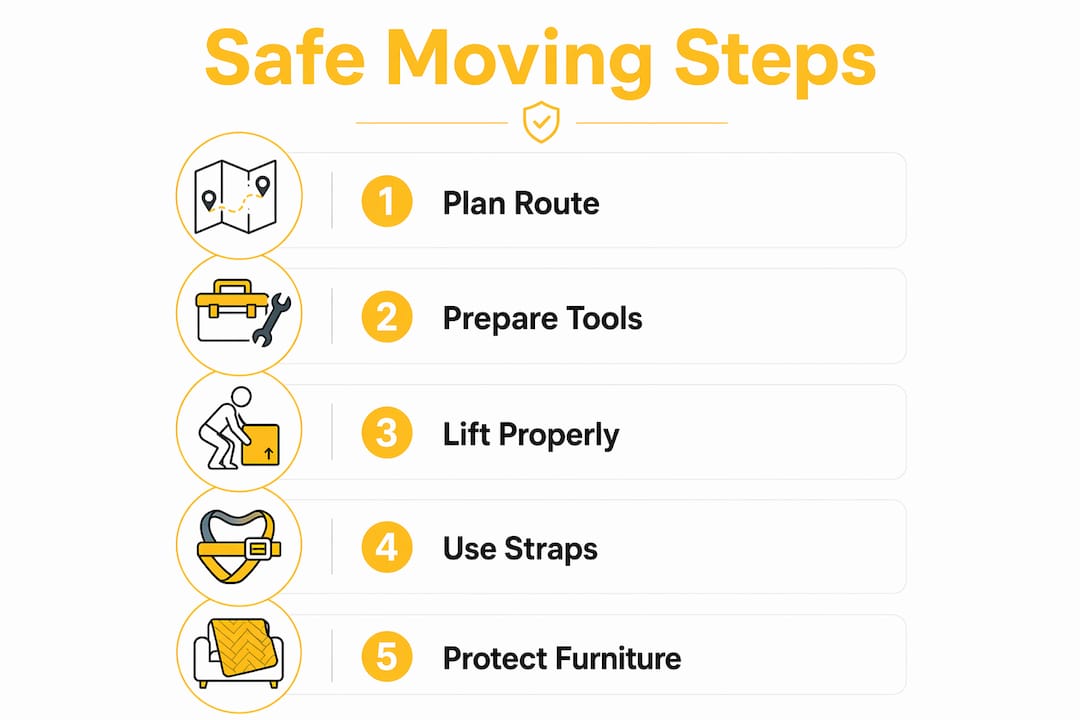
Biomechanics inform lifting safety: use leg muscles, keep the load close to your body, and avoid twisting the torso. These three rules account for the majority of lifting injuries when broken, and they apply whether you are moving a nightstand or a solid oak dining table.
- Bend at the knees, not the waist. Squat down to the piece, grip it firmly, and drive upward through your legs. Your back stays straight throughout. Bending at the waist puts the full load on your lumbar spine, which is not designed for that kind of shear force.
- Keep the load close. The further a heavy object is from your centre of gravity, the more strain it places on your back. Hold pieces against your torso whenever possible.
- Never twist while loaded. If you need to change direction, move your feet first. Twisting the spine under load is the most common cause of serious moving injuries.
- Use straps to redistribute weight. Shoulder harnesses transfer load from your hands and lower back to your legs and core. This is why moving straps reduce felt weight so dramatically. Two people using straps can carry a piece that would be unmanageable without them.
- Communicate clearly with your helper. Agree on verbal cues before you lift: “ready,” “lift,” “set down,” and “stop” prevent the miscommunication that causes dropped pieces and pinched fingers. One person calls the movements; the other follows.
- Tilt furniture to fit tight spaces. Angling furniture diagonally through doorways or tight corners prevents jams and reduces the force needed to manoeuvre the piece. A sofa moved on its end often clears a hallway that it cannot pass through flat.
“Professional movers treat dollies and straps as control tools, emphasising slow, stepwise placement to avoid sudden shifts.” U-Haul moving guidance
Speed is the enemy of safe furniture carrying. Slow, deliberate movement gives you time to react if a grip slips or a corner catches.
How do you handle stairs, tight corners, and loading the truck?
Stairs present the highest injury risk in any furniture move. Stair-climbing dollies reduce effort by 60 to 70 per cent, and the guidance is clear: do not attempt a DIY stair move with any piece over 300 pounds. Above that weight, the risk of losing control is too high without professional equipment and training.
Follow this sequence for the most challenging parts of the move:
- Going downstairs: Place the heavier end of the piece at the bottom, facing down. The person at the lower end controls the descent and bears more weight. Move one step at a time, pausing to reset your grip if needed.
- Going upstairs: The heavier end goes up first. The person at the top guides and pulls; the person at the bottom pushes and controls the angle. Again, one step at a time.
- Tight corners: Tilt the piece vertically if the floor plan allows. Move the leading edge through the corner first, then pivot the trailing end around. A second person spotting from the other side prevents wall damage.
- Loading the truck: Load heaviest furniture first against the cab bulkhead, with moving blankets between pieces and between furniture and the van walls. Lighter items stack on top or fill gaps.
- Securing the load: Use at least two ratchet straps at different heights on tall items. One strap at the top prevents tipping; one at mid-height prevents sliding. This two-point system controls both pivoting and lateral movement during transit.
| Scenario | Key technique | Common mistake to avoid |
|---|---|---|
| Stairs going down | Heavy end faces down, one step at a time | Rushing the descent |
| Stairs going up | Heavy end leads up, pusher controls angle | Lifting instead of pushing |
| Tight corners | Tilt vertically, lead with one edge | Forcing the piece straight through |
| Loading the truck | Heaviest items at cab end, blankets between | Loading light items first |
| Securing in transit | Two ratchet straps at different heights | Single strap at one point only |
Pro Tip: Wrap furniture in moving blankets before tightening ratchet straps. Straps tightened directly against wood or upholstery leave permanent marks and dents.
The moving boxes and supplies available through Bravosmoving include the blankets, wrap, and tape needed to protect pieces before they go on the truck.
Key takeaways
Moving large furniture safely requires preparation, proper tools, and correct body mechanics working together. Skipping any one of these three elements is where injuries and damage occur.
| Point | Details |
|---|---|
| Tools over strength | Moving straps and dollies reduce felt load weight by up to 66 per cent, making safe carries possible for two people. |
| Measure before you move | Record furniture dimensions and doorway clearances before moving day to avoid costly surprises mid-carry. |
| Lift with your legs | Keep the load close, bend at the knees, and never twist the torso to prevent the most common moving injuries. |
| Stairs need special equipment | Use a stair-climbing dolly and respect the 300-pound DIY limit; above that, call professional movers. |
| Secure the load in transit | Two ratchet straps at different heights on tall items prevent both sliding and tipping inside the vehicle. |
What we have learned from thousands of furniture moves
After working with families and businesses across Toronto and beyond, the pattern is consistent: the moves that go wrong are the ones that started in a hurry. People underestimate how long preparation takes, skip the measuring step, and then discover mid-carry that the wardrobe does not fit through the bedroom door. That moment of improvisation under load is exactly when backs get hurt and walls get gouged.
The second most common mistake is treating equipment as optional. A set of furniture sliders costs less than $20. A dolly rental costs $30 for the day. A single physiotherapy visit for a strained back costs far more than both combined, and that is before accounting for the time off work. The investment in proper tools is not a luxury. It is the cheaper option.
My honest advice for very heavy or awkward pieces: know your limit and call for help before you need it, not after. A solid hardwood armoire or a cast-iron clawfoot bathtub belongs in the hands of trained movers with the right equipment. There is no pride in a herniated disc. The families who have the smoothest moves are the ones who are honest about what they can handle themselves and what they cannot.
— Bravos
Let Bravosmoving handle the heavy lifting

When the furniture is too heavy, the stairwell too tight, or the distance too far, Bravosmoving is ready to step in. With a 4.5-star rating from over 4,500 customers across Toronto and beyond, the Bravosmoving team handles everything from local residential moves to long-distance relocations with the same attention to safe furniture handling. Licensed movers arrive with dollies, straps, blankets, and the training to use them correctly. Whether you need full packing and unpacking services or just help with the heavy pieces, explore the full range of professional moving services at Bravosmoving and get a personalised quote today.
FAQ
What is the safest way to lift heavy furniture?
Bend at the knees, keep the load close to your body, and drive upward through your legs while keeping your back straight. Never twist your torso while holding a load.
How much weight can two people safely carry on stairs?
The recommended DIY limit for stair moves is 300 pounds maximum. Above that weight, the risk of losing control is significant and professional movers with specialised equipment are the safer choice.
Do moving straps actually make a difference?
Moving straps cost $20 to $40 and reduce the felt weight of a load by 50 to 66 per cent. They redistribute weight from your hands and lower back to your legs and core, which are far better suited to carrying heavy loads.
How do you get large furniture through a narrow doorway?
Angle the piece diagonally and lead with one corner through the opening. If the piece still does not fit, remove the door and its hinges to gain two to three extra inches of clearance without damaging the frame.
How should tall furniture be secured in a moving truck?
Use two ratchet straps at different heights on every tall item. One strap near the top prevents tipping; one at mid-height prevents lateral sliding. Always place moving blankets between the furniture and the straps to avoid surface damage.
Recommended
Leave a Reply
You must be logged in to post a comment.