

Moving on a tight budget in Toronto and the GTA means making strategic choices about where you spend and where you save. A local move that might cost $3,500 to $8,000 with a full-service mover can drop to $800 to $2,500 if you handle packing yourself, book off-peak dates, and use free supply sources. The tension is real: rushing into the cheapest option often costs more later through damaged goods, failed DIY attempts, or hidden fees. If coordinating a budget move feels overwhelming, local moving services can reduce the unpredictable costs that trap people on thin budgets. Bravos Moving can take care of this if you would rather not do it yourself.
When a tight budget actually applies to your move
Budget constraints matter most when the moving expense is unplanned, when you’re relocating for a new job without relocation support, or when you’re managing a household transition without financial cushion. A move between Toronto neighbourhoods or to a nearby GTA city like Mississauga or Markham costs less simply because the distance is short. moving services toronto.
Be honest about what “tight budget” means for your situation: $1,500 total, or $4,000 with flexibility. That number shapes every choice that follows.
Find free or nearly-free moving supplies before buying boxes
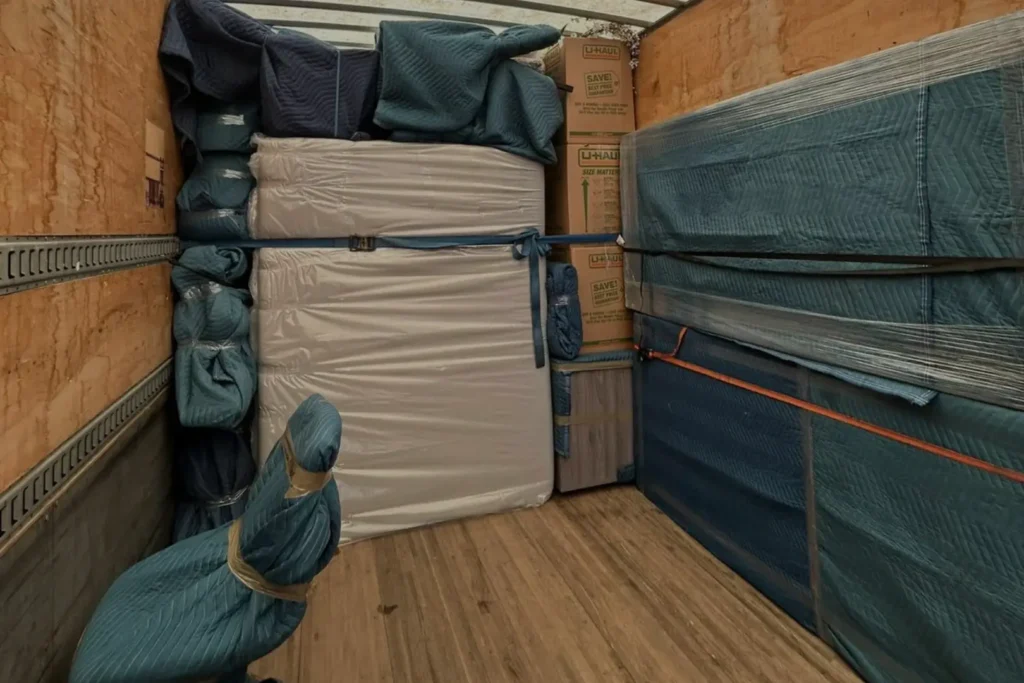
New boxes from moving retailers cost $1 to $3 each, and a two-bedroom move needs 40 to 60 of them. Used boxes and free materials exist, but you have to know where to look and move fast.
Facebook Marketplace and Craigslist list free boxes constantly in the GTA. Reply the same day; these posts disappear within hours. Grocery stores, liquor stores, and bookstores break down boxes daily and will set them aside if you ask. Bakeries and produce suppliers have sturdy boxes designed to hold weight.
Packing material is cheaper to source than boxes. Newspaper, old towels, and clothing serve as padding. Socks, t-shirts, and kitchen linens wrap breakables effectively. Egg cartons protect small fragile items. The trade-off is time: free packing takes longer to source than buying pre-made materials, but the savings compound if you start four weeks before moving day.
Book your move during the GTA’s lowest-demand windows
Moving costs spike 40% to 60% from May through September. If you have flexibility with timing, moving in fall, winter, or early spring drops quoted prices substantially.
Within any month, mid-week moves (Tuesday through Thursday) cost less than weekend moves. Early morning slots cost less than afternoon slots. A move that costs $5,500 in July might run $3,200 in February for the identical distance and volume.
If your move date is fixed, you still have smaller levers. Booking 6 to 8 weeks in advance rather than 2 weeks in advance sometimes unlocks lower rates. Asking for a Monday-morning slot instead of Saturday afternoon saves hundreds. Small timing changes compound when you’re working with a budget.
Hybrid approach: pack yourself, hire movers for the physical work
Full DIY moving saves the mover’s labor cost but trades it for your time, physical strain, and risk of damage. Truck rental alone costs $60 to $150 per day plus gas and distance charges.
A hybrid approach often makes more sense on a budget: you pack all your boxes and wrap furniture at home over several weeks, then hire a crew for 3 to 4 hours to load, drive, and unload. This costs $800 to $1,500 depending on distance and crew size, but it protects you from the hardest and most injury-prone part of moving.
Another option: hire a moving company for partial load service. You pack and transport some items yourself, and the movers handle heavy furniture, large appliances, and breakables. Packing and unpacking services can also be booked à la carte rather than as a full package.
Use a friend’s truck or rent shared moving equipment
Borrowing a truck from someone who owns one (and offering gas money or a meal) costs nearly nothing. The risk is that borrowed equipment means borrowed liability; if you damage the truck or someone gets hurt, that’s your problem.
Rental companies including Home Depot and U-Haul offer truck and van rentals by the hour. Hourly truck rental costs $20 to $30 per hour and works well for local moves within the GTA. If you’re moving across the GTA, a one-way daily rental is cheaper than hourly. Check both options when comparing costs.
Negotiate your moving quote before accepting it
A moving company estimate is an opening bid, not a final price. Most companies leave room for negotiation, especially in off-season or if they have availability. If you have quotes from two or three movers, bring them to the conversation.
Specific negotiation tactics: ask if they offer discounts for paying upfront or in cash. Request a lower estimate if you can move on a less-convenient day or time. Ask if they can group your move with others heading the same direction. If you have a flexible end date, ask about their cancellation list.
Never negotiate on safety or insurance to save money. Liability coverage and proper equipment aren’t optional. What you can negotiate: crew size, truck size, specific add-ons you don’t need, and timing. Be clear about what’s non-negotiable versus what’s flexible.
Avoid the hidden costs that trap budget movers
Budget moves derail because of expenses that don’t show up in the initial quote. Access fees (elevators, parking permits, building restrictions) can add $200 to $500 to a GTA condo move. Disassembly and reassembly of furniture isn’t always included in base quotes. Ask about these costs before booking.
Storage adds up fast. If your new place isn’t ready and you need to store boxes for a week or two, temporary storage can run $100 to $300. Plan your move-out and move-in dates to avoid gaps. If a gap is unavoidable, ask movers upfront what their short-term storage costs are, or research independent storage options before booking.
Mileage overage and fuel charges appear in small print. If you’re quoted a “flat rate” for a GTA move, confirm whether it includes the actual distance. Some movers add a fuel surcharge if gas prices spike; check the contract language.
Reduce what you’re moving in the first place
The cheapest moving expense is the stuff you don’t move. Before you pack, sort ruthlessly. Anything unused in the past year, broken items you plan to “fix someday,” and duplicates are candidates for disposal, donation, or sale. Selling used furniture, electronics, and books on Facebook Marketplace or Kijiji takes time but turns clutter into moving money.
Downsizing before a move cuts both the volume movers need to transport and the physical time required. A two-bedroom move with 40 boxes costs substantially less than the same move with 70 boxes.
What to expect when your budget hits reality
Budget moves demand more planning and flexibility than fully-funded ones. You’ll face trade-offs between time, money, and quality. Hiring a mover costs more than renting a truck, but it’s safer and faster. Buying new boxes costs more than sourcing used ones, but it takes less time.
One boundary to keep: never sacrifice insurance or proper packing to save money. Damaged goods during a cheap move become expensive losses. Skipping liability coverage to reduce the quote by $300 leaves you exposed to thousands in liability if you cause damage during loading.
Deciding when to hire help versus managing it yourself
Hire movers if you have physical limitations, limited time, or items requiring specialized handling. Hire movers if the distance exceeds 30 kilometres or the volume exceeds what you can reasonably pack in 4 weeks. Hire movers if one person is managing the entire move alone.
You can reasonably DIY or go hybrid if you’re moving locally, you have time to pack over 4 to 6 weeks, you have friends who can help, and the volume is modest. Hybrid usually strikes the best balance when money is tight.
Budget movers benefit from moving checklists and structured planning. Start 8 weeks out. Set weekly packing targets. Book quotes 4 to 6 weeks in advance. Confirm all details two weeks before moving day. Structure turns chaos into manageable steps, and manageable steps keep costs predictable.
Ready to move on your budget
Moving on a limited budget in the GTA is achievable if you start early, source supplies strategically, and book during off-peak windows. The real savings come from timing and planning, not from cutting safety corners. Hybrid approaches often deliver better results than fully DIY or fully outsourced moves when money is tight. Start your planning 8 weeks before your target move date, confirm your budget constraints honestly, and prioritize the costs that matter most.
Ready for a clear next step?
If you're mapping a budget move in Toronto or the GTA and want to lock in competitive pricing for the labor-intensive parts, reach out with your details and move timeline. We'll be direct about what we can handle affordably and where your own preparation saves the most.
Next steps for move with limited budget toronto gta
Moving on a tight budget in the GTA is possible with early planning, off-peak timing, and strategic choices about where you hire help. The false economy is rushing into the cheapest option; the real economy is timing your move for low-demand dates, sourcing supplies strategically, and investing in labour only where it protects you from injury or damage. Start eight weeks out and prioritize planning over panic.
Next steps for moving on a tight budget toronto gta
Moving on a tight budget in the GTA is possible with early planning, off-peak timing, and strategic choices about where you hire help. The false economy is rushing into the cheapest option; the real economy is timing your move for low-demand dates, sourcing supplies strategically, and investing in labour only where it protects you from injury or damage. Start eight weeks out and prioritize planning over panic.
FAQ
How much can I save by moving off-season in the GTA?
Moving in off-peak seasons (fall, winter, early spring) typically costs 40% to 60% less than summer peak season. A move quoted at $5,500 in July might cost $3,200 in February for the same distance and volume. Mid-week bookings and early morning time slots add further savings compared to weekend moves.
Where do I find free or cheap moving boxes in Toronto and the GTA?
Facebook Marketplace and Craigslist have free boxes from people finishing moves; reply quickly as listings disappear fast. Grocery stores, liquor stores, bakeries, and bookstores break down boxes daily and will set them aside if you ask. Egg cartons, old towels, clothing, and newspaper serve as free packing material and work as well as bubble wrap for most items.
Is it cheaper to rent a truck and move myself, or hire a moving company?
Truck rentals cost $60 to $150 per day plus gas and distance fees, but you assume all physical risk and liability. A hybrid approach—packing yourself over 4 to 6 weeks, then hiring movers for 3 to 4 hours of labor—typically costs $800 to $1,500 and protects you from injury while keeping costs manageable. Full DIY works only if you have time, friends to help, and modest volume.
What hidden costs should I budget for on a GTA move?
Access fees for elevators or parking permits ($200 to $500), furniture disassembly and reassembly ($100 to $300), short-term storage if move-in dates don't align, and mileage overages or fuel surcharges are common. Always ask movers about these before booking and confirm the distance and labour estimates in writing to avoid surprises.
How early should I start planning a budget move in the GTA?
Start 8 weeks before your target move date. This gives you time to source free supplies, book quotes at 4 to 6 weeks out (before filling up), plan your packing in stages, and choose an off-peak date if you have flexibility. Budget moves require more planning than fully-funded ones to keep costs predictable.
Can I negotiate a moving quote, and what should I ask about?
Yes. A moving estimate is an opening bid. Bring quotes from other companies, ask about discounts for off-peak dates or morning time slots, and confirm what's included (disassembly, access fees, liability coverage). Never negotiate on insurance or safety to save money. Negotiate timing, crew size, and specific add-ons instead.